Exterior shades
No Patio Outlet? Keep Motorized Shades in the Plan
A solar-recharged battery may suit some lightweight exterior screens. Learn what to check about panel exposure, shade load, fabrics and winter care.
- Adapted for this site
- Originally published
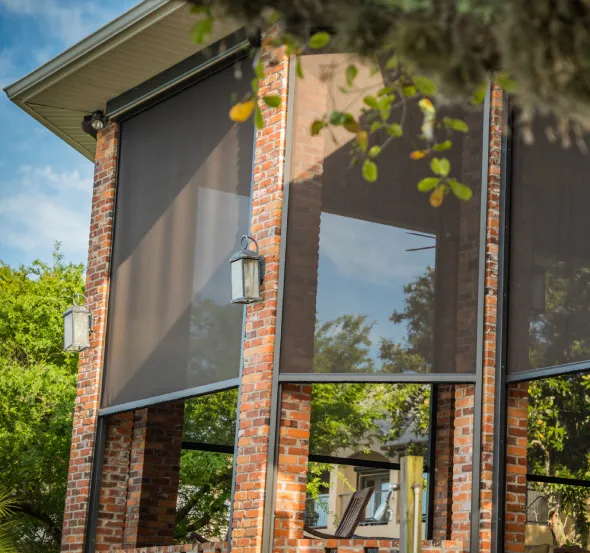
A covered porch with four or six openings can be a great candidate for exterior shades—until you look at the patio outlet and realize it is already occupied. That is a reason to review the power plan, not automatically a reason to give up on motorized screens.
One possible approach uses a solar panel to recharge a battery, which then powers the shade motor. The shade does not need direct sunlight at the instant you press the control. This is a dedicated shade power system, not a requirement to install household rooftop solar.
Solar is an option to evaluate, not a universal upgrade
SunPro Products describes a rechargeable solar battery option for lightweight screens. That qualification matters: a suitable motor, screen load, fabric, opening size and control setup all have to work together. Solar should not be assumed compatible with every large zipper shade or every motor in the catalog.
Motor torque describes turning force; it is not a measurement of battery capacity, shade width or how long a charge will last. A motor specification on its own cannot establish that a particular opening is suitable for solar-recharged operation.
During planning, ask whether the actual proposed screen supports a solar-recharged system and what care or charging access it needs. A power option is useful only when it fits the complete installation.
Map the openings and the panel exposure together
Start with how the porch is used. You may want every shade to move together, or prefer to lower the west side while keeping another view open. Similar-looking openings can have different dimensions or mounting conditions, so each deserves a measurement.
Then consider where a panel can receive suitable exposure. The roof that makes the porch comfortable can also shade the charging panel. Trees, nearby buildings, overhangs and seasonal sun angles can change the available light. Panel placement and the route to the shade housing belong in the design, not at the end of the installation.
Front Range homes do not all have the same exposure. A shaded deck in Boulder and an open patio near Pueblo may need different approaches, even if the openings are the same size. Winter access and manufacturer operating limits matter alongside summer performance.
- Count and measure the openings.
- Decide which shades should operate together.
- Identify possible panel locations with suitable exposure.
- Keep components accessible for inspection and care.
An occupied outlet does not describe the whole electrical system
Two receptacles tell you how many plugs can fit at that location, not how much capacity the home's circuit has. An outlet already in use does not establish whether a wired installation is possible or safe.
If wired shades are preferred, an electrician can assess the existing circuit and a suitable route for the selected equipment. Avoid solving the question with improvised outdoor extension cords. Compare the practical installation requirements of wired and solar-recharged options before choosing.
Fabric and tracks still determine how the porch feels
Power is only one part of a useful screen. Fabric openness, color and mesh type affect glare, airflow and the outward view. A screen selected mainly for insects may not give the same solar filtering as a denser fabric.
Privacy depends on lighting on both sides. Mesh does not guarantee nighttime privacy when the covered space is lit. A tracked screen also does not turn a porch into a waterproof, insulated or conditioned room. Choose the system for the comfort problem you actually want to solve.
SunPro distinguishes traditional tracked screens, cable-guided open rollers and recessed systems. Do not treat a solar power option as proof that all those constructions have the same sealing, weather performance or mounting requirements.
Plan for cold-weather care
SunPro's cold-weather insect and solar screen care guide advises allowing frozen components to thaw before raising the screen. Follow the instructions for the chosen system instead of trying to force a frozen bottom bar or track.
Keep the manufacturer's care document with your project paperwork. Our resources directory links to the original guide, along with product information, so you can distinguish operating guidance from marketing descriptions.
Bring the power question to your consultation
Tell Wise Choice Exteriors how many openings you have, which direction they face, whether nearby outlets are occupied and where a panel might receive light. Photos of the beams, posts and surrounding roof help us understand the space.
We will review mounting, fabric, controls and the power options suitable for the proposed configuration. Explore our exterior shades below or request a free in-home consultation within our current service area. No convenient outlet does not have to end the conversation.