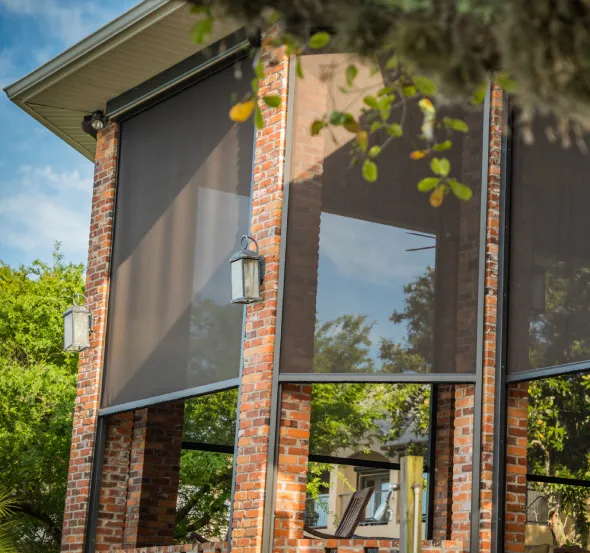
Retractable awnings
Why Fall Is a Good Time to Plan Your Awning for Spring
Use the cooler months to plan awning size, mounting, fabrics and installation timing, without relying on promised lead times or a guaranteed spring date.
- Adapted for this site
- Originally published
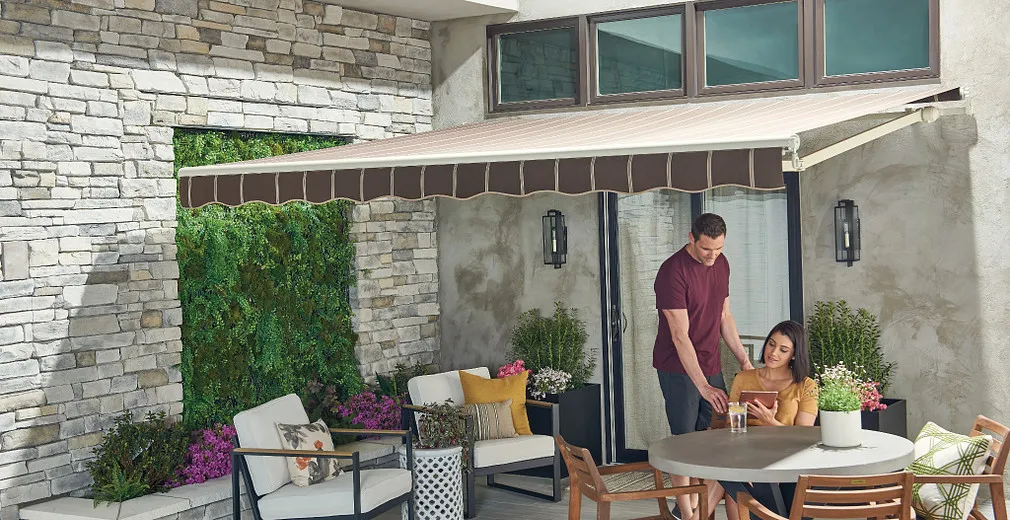
When evenings cool down, shade may be the last improvement on your mind. The furniture is being put away and the family is spending less time on the deck. It is easy to decide you will think about an awning when warm weather returns.
But if the goal is to enjoy the patio next spring, the cooler months offer a useful planning window. The advantage is not a promise that factories work faster in fall. It is having more time to measure, compare options and understand the project before the first afternoon when you wish the shade were already installed.
Plan before shade becomes urgent
Many homeowners remember the problem on the first bright weekend of spring: the dining table is in full sun, a favorite chair gets too hot and the back door lets in afternoon glare. Starting a project then is still possible, but every decision can feel like another week of patio use lost.
Beginning earlier lets you separate the design conversation from the pressure of wanting immediate shade. Manufacturing, delivery, site preparation and installation scheduling all have to fit. Current timing depends on the product and the circumstances of the order.
A lead-time estimate is a snapshot, not a permanent specification. Ask for current timing when you choose a configuration, and treat it as project-specific information—not a guarantee carried over from another season. Manufacturing schedules can also reflect demand from regions where patio weather starts earlier than it does here.
Use what you remember about last summer
The most helpful starting point is a description of the problem, not simply a request for the biggest awning. Was the dining area uncomfortable at lunch? Did the west-facing deck become hard to use after work? Was low-angle sunlight getting under an existing cover?
Those observations help determine placement, width and projection. The awning needs to work with doors, windows, gutters and a mounting surface that can support the chosen configuration. A catalog picture cannot answer those questions for a particular home.
Keep a few photos showing the sun and furniture arrangement. Discuss the time of day you want shade, and whether keeping an open-sky view when retracted is a priority. A useful consultation connects the dimensions to everyday use.
- Identify the seats or table that need shade.
- Note the time and direction of troublesome sun.
- Check door clearance and mounting constraints.
- Gather any HOA requirements before finalizing the design.
Compare the housing and features deliberately
SunSetter and SunPro both have different awning families; they are not a single interchangeable specification. SunSetter's Platinum Plus uses a semi-cassette covering, while Beyond fully encloses the fabric when retracted. Selected Pro configurations add a front drop screen.
SunPro distinguishes open-roll, semi-cassette and full-cassette styles. The open-roll model does not include integrated arm lighting. Its semi-cassette and full-cassette styles do include adjustable lights. Custom-width and mounting choices also vary by style.
Use the product page and manufacturer resources to narrow down questions about fabrics, controls, retracted appearance and accessories. Confirm the exact model and what the quote includes before relying on a feature shown elsewhere in the range.
Keep weather expectations realistic
A retractable fabric awning is primarily a shade solution. The protection offered by a cassette is protection while the awning is retracted, not permission to leave it extended through storms or snow.
Ask how to operate and store the chosen model when weather changes. Wind sensors are not a substitute for following the manufacturer's instructions. We do not apply a blanket wind rating to every awning or promise that one setup will handle every Front Range condition.
Consider the patio as a whole
If overhead sun is only part of the problem, consider whether side screens or a louvered pergola better match the space. A covered porch with low-angle glare needs a different conversation from an uncovered deck that needs shade from above.
Exterior screens can improve comfort without making an insulated room. A louvered pergola adds adjustable overhead cover but still requires attention to drainage, structure and site conditions. Our existing shades and pergolas pages explain those options; full sunrooms are not part of this imported resource collection.
Planning several improvements together gives you time to understand attachment points, controls and the order of work. It does not mean you have to commit to every option at once.
Start with a realistic plan for your home
Wise Choice Exteriors works with homeowners from Boulder and the Denver metro through Colorado Springs to Pueblo. The same early-planning approach applies across that service region, while the details depend on each home.
Explore our awning options and manufacturer comparisons, then request a free in-home consultation. We can measure, discuss the available configurations and explain a custom quote with current scheduling information. Starting earlier creates room for those decisions; it does not promise a particular installation date.